
Last updated November 23, 2026
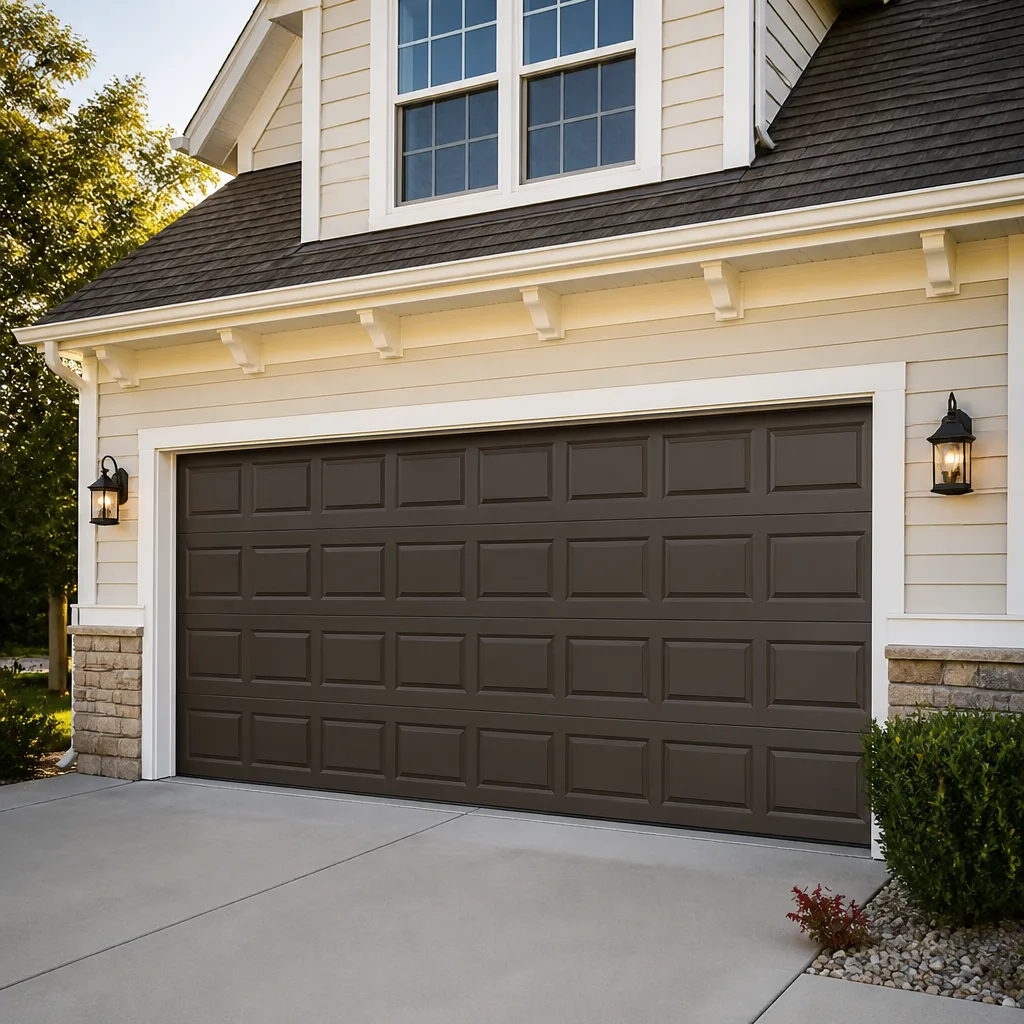 Raised-panel steel
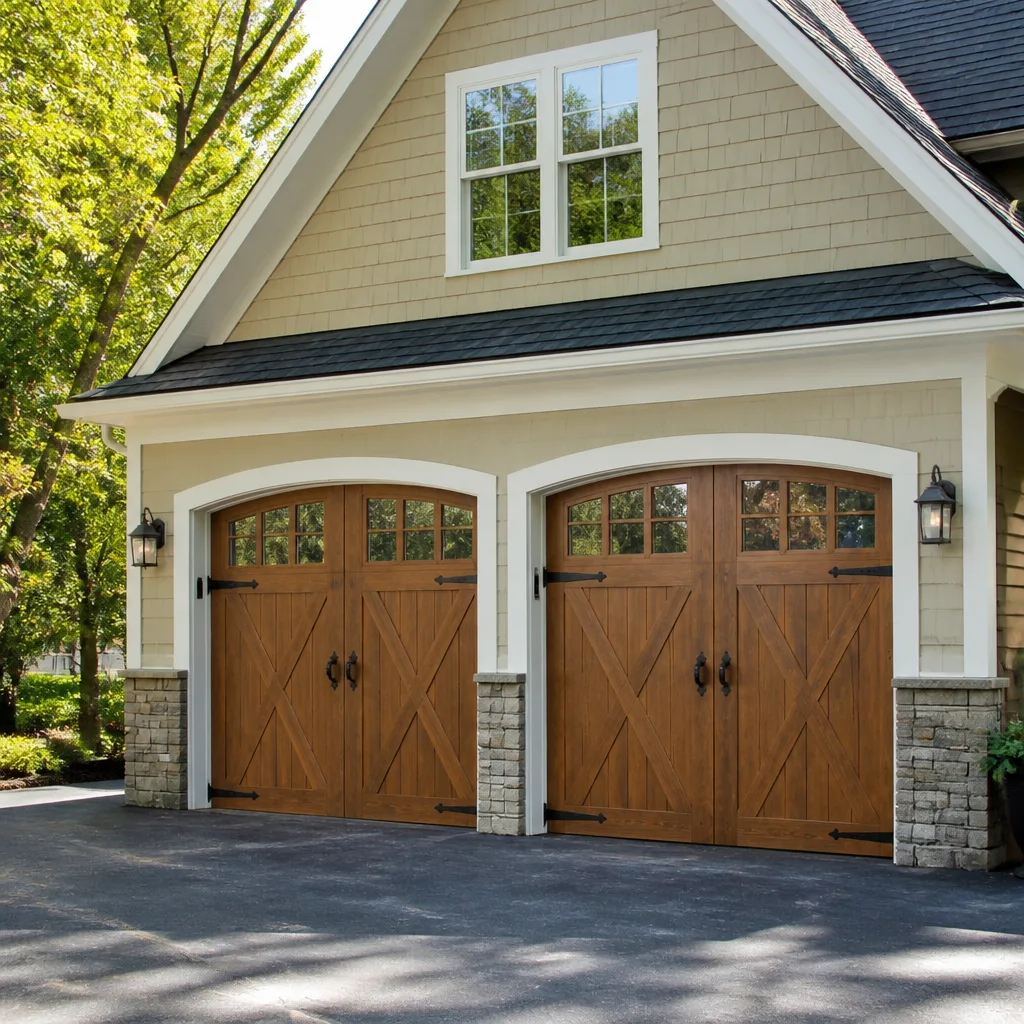 Carriage house
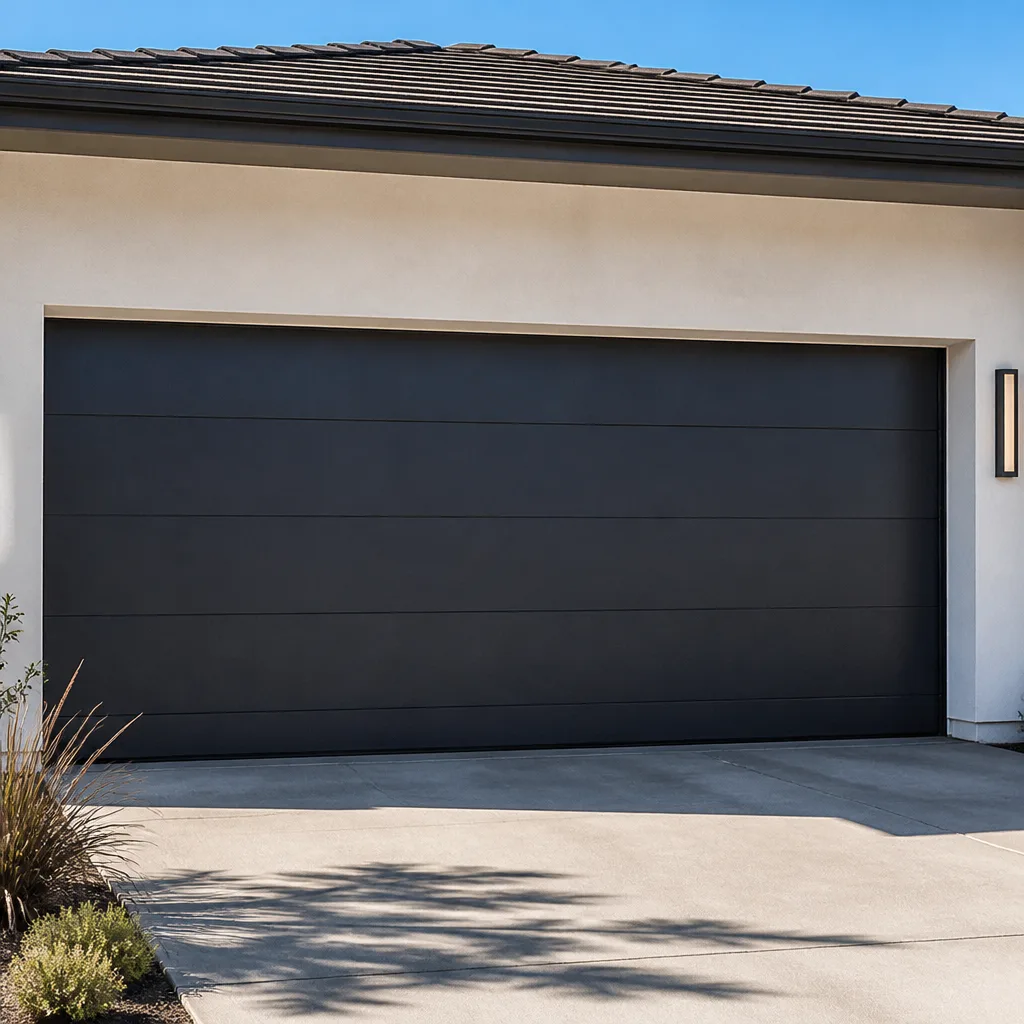 Modern flush
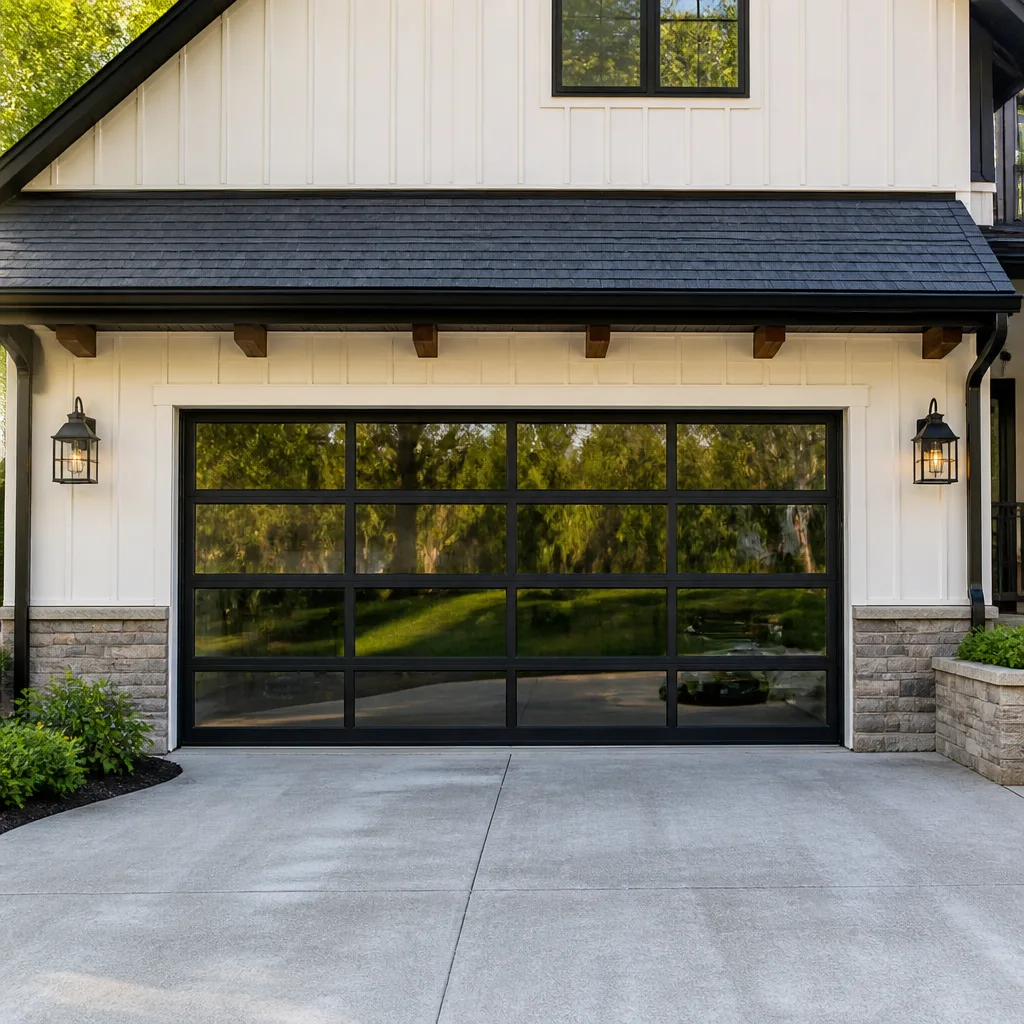 Full-view glass
 LiftMaster openers
 Chamberlain openers
Full 25-point door and opener safety check with every visit - springs, cables, rollers, tracks, and your LiftMaster or Chamberlain opener included
You get a price before we start. It does not change when the pro arrives.
Get your free estimateGarage Door Emergency Preparedness Guide for Holyoke Homes
The most expensive part of most garage door emergencies isn’t the broken component. It’s what happens in the first ten minutes, when a homeowner forces a door that’s frozen to the ground or grabs a cable that’s still under tension. Those two reactions turn a straightforward repair into a full rebuild, and they happen most often in Holyoke’s February cold, when the ice comes in hard and stays.
What separates a controlled emergency from a bad one is knowing the sequence before it happens: which part failed, what you can safely touch, what you must leave alone, and what to tell the technician so the right parts come with them. This guide covers that sequence door by door. You’ll learn how the manual release cord really works, what to do when a cable snaps and the door hangs crooked, how to secure an open door while you wait, and the three facts every Holyoke homeowner should have ready before they call.
Quick Answer
A garage door emergency in Holyoke is handled safely by stopping all movement of the door, keeping people and vehicles clear of the travel path, and calling a technician rather than forcing anything. If the door is stuck open, secure it with locking pliers on the track before you do anything else. Never force a frozen door, and never touch a cable or spring under tension.
Styles & brands we work with
- Raised-panel steel
- Carriage house
- Modern flush
- Full-view glass
- LiftMaster openers
- Chamberlain openers
Table of Contents
- The Manual Release Cord: How It Works and When Not to Use It
- Scenario-by-Scenario Response Guide
- What to Do When a Cable Snaps and the Door Hangs at an Angle
- How to Secure an Open Door While You Wait
- What to Have Ready When You Call for Emergency Service
- Why Holyoke Winters Are Hard on Garage Doors
- Springs and Torsion Systems: The Parts You Must Never Touch
- Preparedness Checklist Before the Next Failure
The Manual Release Cord: How It Works and When Not to Use It
The manual release cord disconnects the door from the opener so it can be moved by hand, and it’s the single most misunderstood piece of hardware on a garage door. It hangs from the trolley that rides the opener rail, usually with a red handle. Pulling it releases the trolley from the door arm. After that, the opener runs but the door doesn’t move, because the two are no longer connected.
That’s the whole mechanism. It exists so you can operate a door by hand when the opener has no power or has failed. It is not a repair tool, and it does not help with a mechanical problem in the door itself.
Here’s the scenario that catches people: a broken spring. A torsion or extension spring is what counterbalances the full weight of the door. When one fails, that counterbalance is gone. Pull the release cord in that condition and the door becomes dead weight on the tracks, with nothing holding it up but friction and hope. It can drop fast enough to injure anyone underneath. If you suspect a spring has broken – usually a loud bang from the garage followed by a door that won’t lift – leave the cord alone and call for spring repair.
When the cord is genuinely useful:
- The opener has lost power and you need to move the door by hand. Only do this if the door feels light and balanced as you lift it slowly.
- The opener motor has failed but the door itself moves smoothly.
- A technician has told you to use it while troubleshooting by phone.
If the door feels heavy, binds, or won’t stay up when you let go halfway, stop and close it gently. That’s a counterbalance problem, and it’s a job for garage door spring repair.
Scenario-by-Scenario Response Guide
Every garage door emergency in Holyoke falls into a handful of patterns. Recognizing which one you’re in tells you what to do in the first minute.
1. The door won’t open and your car is inside
- Check the opener: is there power, and does the motor hum without moving the door? A hum with no movement points to the opener or a stripped gear.
- Look at the springs above the door. A visible gap in a torsion spring, or a stretched-out extension spring hanging loose, means the door is not safe to lift.
- If the springs look intact and the door lifts easily by hand after releasing the trolley, the problem is the opener. Call for garage door opener repair.
- If the door won’t budge or feels extremely heavy, leave it closed and call for emergency service. Forcing it risks bending panels and the track.
2. The door won’t close during a winter storm
This is usually ice, not a mechanical failure. The bottom seal freezes to the concrete, or ice builds in the track and the safety sensors see an obstruction. Never force the door down with the opener’s repeated attempts; that strains the motor and can snap a cable. Clear visible ice from the threshold and the lower track by hand, with the door fully open and the opener disconnected from the door. If it still won’t close, leave it and call.
3. Bottom panel impact damage
A dented or cracked bottom panel can still function, but a broken bottom section that’s off its hinges can derail the whole door. If a vehicle has backed into the door, don’t run the opener until a technician has looked at the panel alignment and the track. See garage door repair for panel and structural work.
4. Power outage with no working manual release
If the release cord is jammed or the handle has broken off, don’t climb a ladder to reach the trolley. The door is held by its springs, and the opener arm is under load. Call us. We answer 24/7, and a call outside dispatch hours is booked into the next opening, Sunday through Friday, 7am to 7pm.
What to Do When a Cable Snaps and the Door Hangs at an Angle
A snapped cable is one of the few garage door failures that can genuinely injure someone standing nearby, because when one side lets go, the door comes down unevenly and the remaining cable takes the entire load. The correct response is short.
- Get clear of the door. Move people, pets, and vehicles out of the garage or away from the door’s path.
- Don’t run the opener. The motor will keep pulling on a door that’s off balance and can drop it completely.
- Don’t touch the hanging cable. Even a slack-looking cable can snap taut. Never try to reattach, loop, or cut it.
- Don’t try to lift the door by hand. With one cable gone, the door’s balance is unpredictable.
- Secure the door if it’s open. Use locking pliers on the vertical track on each side, clamped tight against a roller, so the door can’t slide down. See the next section for the technique.
- Call for emergency service. A cable replacement is a spring-and-cable job. It needs proper tools and correct cable tensioning.
Cables work with the springs as a system. In Holyoke’s climate, cables and drums accumulate grit from road salt tracked in on tires, and that grit accelerates wear on the cable and the drum. That’s a reason to have both inspected when either is serviced.
How to Secure an Open Door While You Wait
If the door is stuck open and won’t close, the priority is making sure it can’t free-fall onto a person or a vehicle. The safe method uses locking pliers on the vertical track, on both sides. It’s a temporary hold, not a repair.
- Keep everyone out from under the door.
- Clamp a pair of locking pliers on the vertical track just below a roller, on one side, jaws tight against the track so the roller can’t roll down past it. Repeat on the other side.
- Test the hold gently. Push up slightly on the door and let go. It should not descend. If it does, reposition the pliers closer to the roller.
- Disconnect the door from the opener only if you’re certain the springs are intact. If a spring is broken, don’t touch the release cord – the pliers are your hold, and the door should stay where it is until a technician arrives.
- Keep the garage door area clear so no one bumps the door or the pliers.
Locking pliers are a temporary measure that keeps the door from free-falling while you wait for a technician to arrive. They don’t fix anything, and they aren’t load-rated for the door’s full weight – but they’ll hold a door that’s balanced on its springs long enough for a technician to get there. We answer 24/7. A call outside dispatch hours is booked into the next opening, Sunday through Friday, 7am to 7pm, and fast dispatch runs from 7am to 7pm.
What to Have Ready When You Call for Emergency Service
The fastest way to get a technician to your door with the right parts is to have three facts ready before you dial. We work on equipment from LiftMaster, Chamberlain, Genie, Clopay, Amarr, Wayne Dalton, Craftsman, and Raynor, so brand recognition is immediate on our end – what we need from you is the detail.
- Door width and type. Measure the inside width of the opening and note whether it’s a single or double door. A single-car door is typically about 8 to 9 feet wide; a double runs about 16 feet. Also note whether the door is sectional (horizontal panels) or one-piece.
- Opener brand and model. The brand name is usually printed on the motor housing or the wall control. A Genie or LiftMaster label tells us the parts family. The model number, often on a sticker under the light cover, tells us the exact unit.
- Spring type. Torsion springs mount on a horizontal shaft above the door; extension springs run along the horizontal tracks on each side. A photo of the spring assembly, the door, and the opener label is even better. Text or send it when you call.
- What’s happening right now. “Door won’t open, car inside, spring looks intact” tells us more than “it’s broken.”
- Your address and access notes. Holyoke has plenty of narrow driveways and steep grades in the Highlands and along the flats near the river. Let us know if the driveway is steep or tight so we can plan.
These five items cut the time between your call and a working door. Call (866) 369-5561 with them ready. We answer 24/7.
Why Holyoke Winters Are Hard on Garage Doors
Holyoke sits in the Connecticut River valley, and winter here brings repeated freeze-thaw cycles along with heavy snow and ice. That pattern is harder on a garage door than a single deep freeze. Water melts into the bottom seal and the track during the day, then refreezes overnight, and the door is stuck to the floor by morning. Every attempt to force it strains the opener, the springs, and the cables.
A few Holyoke-specific realities worth knowing:
- The bottom seal is the first casualty. A hardened, cracked seal lets meltwater reach the door’s bottom section, where it freezes and splits the panel.
- Road salt tracked in on tires lands on the tracks and hinges and speeds up corrosion on the rollers and cables. Wipe down the tracks and lubricate the hinges and rollers before the first hard freeze.
- Ice dams and roof shedding can drop snow and ice onto the door and the opener arm. Clear the area above the door after a heavy storm.
- The safety sensors at the bottom of the track are easily blocked by snow or fogged by condensation during a thaw. The door won’t close if the sensors can’t see each other.
In our experience, the doors that fail in February are the ones nobody looked at in October. A short pre-winter inspection – seal, tracks, springs, cables, and sensors – prevents most of the emergencies that come through our line in January and February. If a spring already looks worn or a cable is frayed, replace it before the cold sets in, not after.
Springs and Torsion Systems: The Parts You Must Never Touch
A torsion spring holds the full weight of the door under significant tension. That’s the entire reason a garage door feels light to lift by hand. It also means the spring is the most dangerous component on the door, and there is no safe DIY adjustment or replacement. A spring under tension can release stored energy instantly, and the tools used to wind and unwind it are specialized for good reason. Every year, homeowners are seriously injured trying to adjust a torsion spring with ordinary tools.
The same caution applies to the cables and drums. A cable under tension is a loaded part. Never cut, loosen, or re-route one. If a cable has snapped, treat the door as unstable and call for emergency service.
What you can safely do:
- Look. A visible gap in a torsion spring, or a gap between coils you can see light through, means it’s broken. Stop using the door.
- Listen. A loud bang from the garage with no other cause is often a spring failure.
- Note. Which type of spring it is, whether the door has one or two, and whether one side sits lower than the other. That’s information for the technician, not a reason to touch anything.
If the door has a broken spring, don’t use the manual release cord and don’t run the opener. Spring repair is a dedicated specialty for us because it’s the highest-safety, most failure-prone component of the system. Our technicians have up to 11 years of experience, and they’re factory-familiar with the spring and opener combinations on the major brands. Call (866) 369-5561. We answer 24/7. Fast dispatch from 7am to 7pm, Sunday through Friday.
Preparedness Checklist Before the Next Failure
Emergencies are easier to manage when half the work is done ahead of time. This checklist takes an afternoon and covers the door, the opener, and the parts that fail.
- Test the balance by hand. With the door closed and the opener disconnected, lift the door halfway. It should stay put. If it drifts down or feels heavy, the springs need attention.
- Test the safety reverse. Place a roll of paper towels under the door’s path and run the closer. The door should reverse on contact. If it doesn’t, the opener needs service.
- Inspect the cables. Look for frayed strands, kinks, or rust at the drum. A frayed cable is a snap waiting to happen. Don’t touch the cable – note what you see and call.
- Lubricate the moving parts. Rollers, hinges, and the torsion spring coils take a garage door lubricant, not grease. Keep the tracks clean and dry – grease in the tracks attracts grit.
- Check the bottom seal. Run a hand along it for cracks, and replace it before the first freeze if it’s hardened.
- Clear the sensors. Wipe the lenses and confirm both lights are solid when the door is closed. Relocate anything stored near the track.
- Know your hardware. Write down the door width, the opener brand and model, and the spring type. Keep it on the garage wall or in your phone. When an emergency happens, you’re not guessing.
Post this checklist on the wall by the garage door. It’s the same information a technician uses, and it’s the fastest way to make an emergency a short call rather than a long afternoon.
Common Mistakes to Avoid
- Forcing a frozen door. In Holyoke, a door frozen to the concrete won’t open with more force from the opener – it’ll bend a panel or strip the opener gear. Clear the ice by hand with the door open and disconnected.
- Pulling the manual release with a broken spring. With the counterbalance gone, the door becomes dead weight. Leave the cord alone whenever the door is heavy or a spring looks broken.
- Trying to fix a snapped cable. A cable under tension can release without warning. Never touch, cut, or reattach one.
- Running the opener on a crooked door. A door that’s off its tracks will keep pulling and can drop or derail the whole assembly. Stop, secure it, and call.
- Greasing the tracks. Oil in the tracks collects grit and salt from Holyoke streets, which grinds the rollers. Keep the tracks clean and dry, and lubricate the hinges and rollers instead.
- Climbing a ladder to reach the trolley. The opener arm sits under the load of the door. Don’t reach for it or try to reconnect it yourself.
- Waiting until the door fails to learn the model numbers. Knowing the opener brand and door width before you call is the difference between a fix on one visit and a parts order.
See the difference
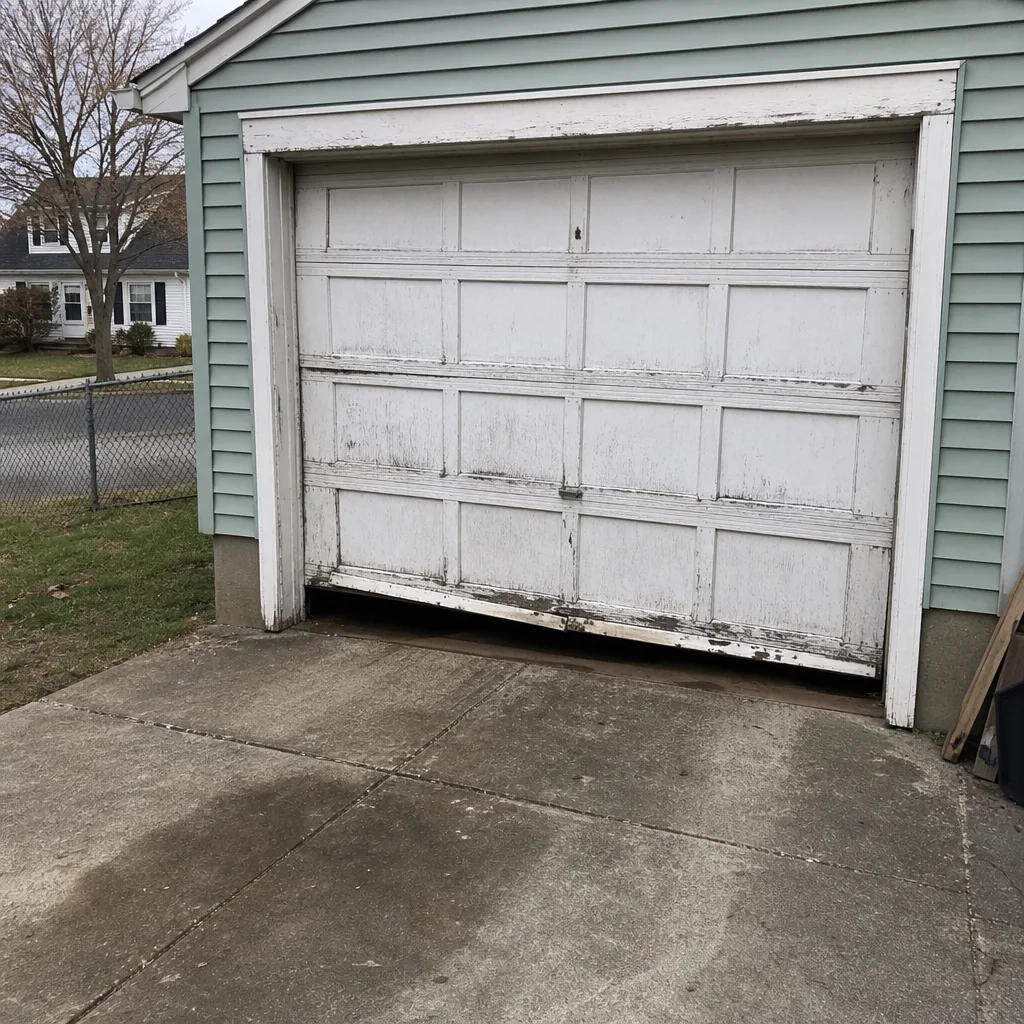 Before
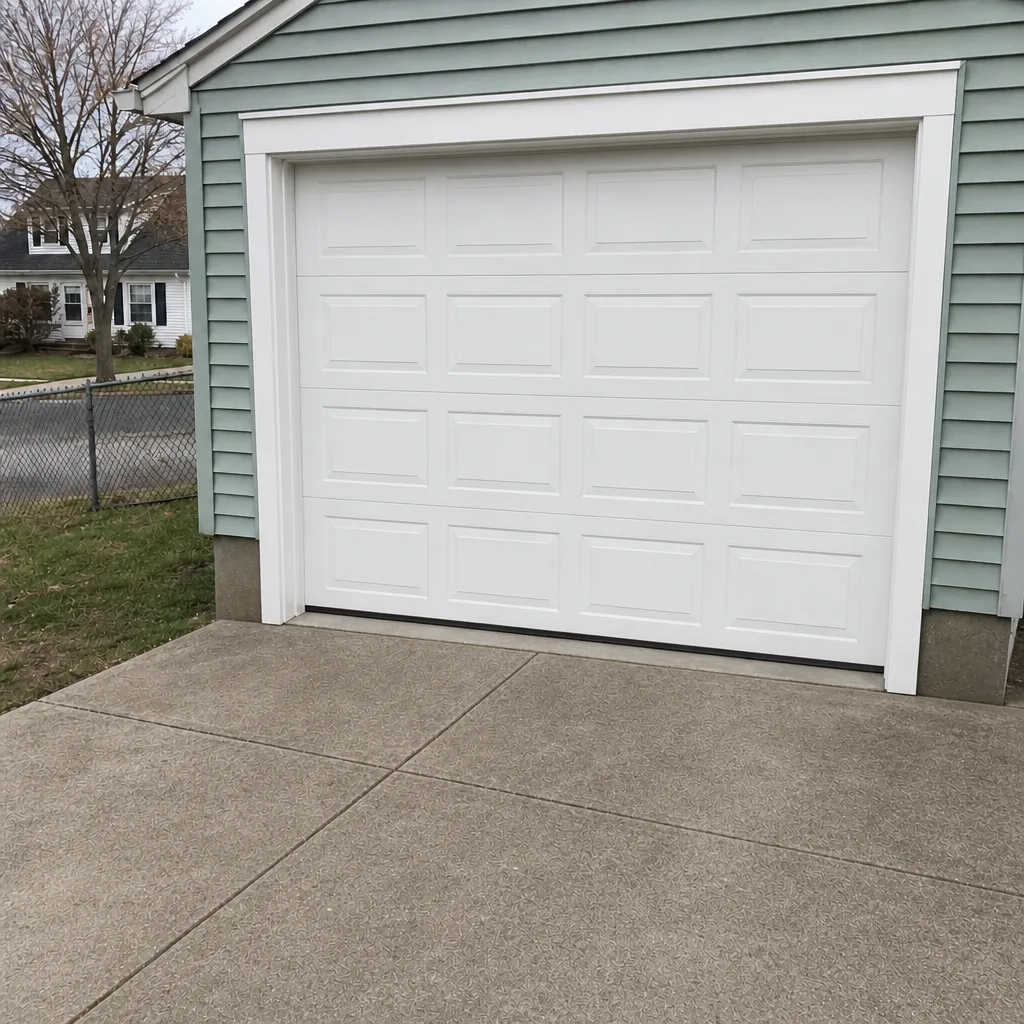 After
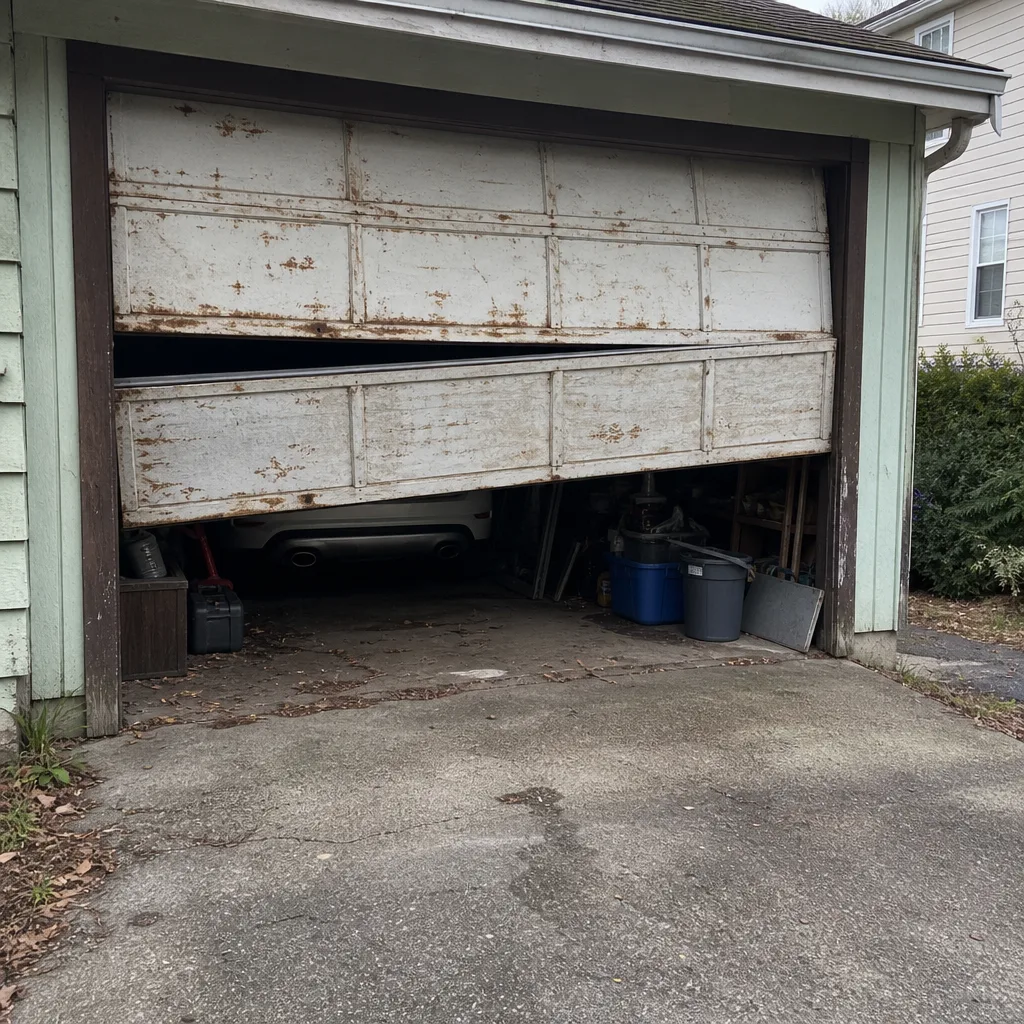 Before
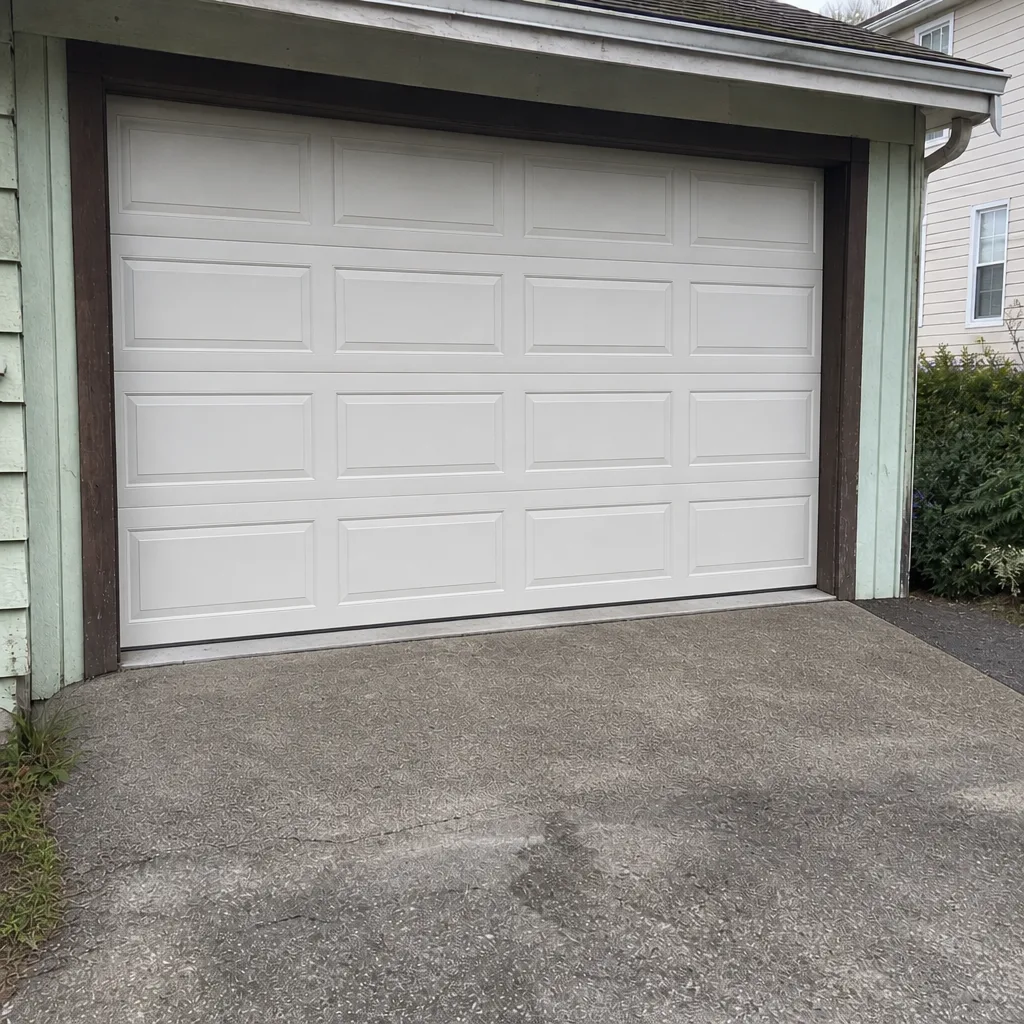 After
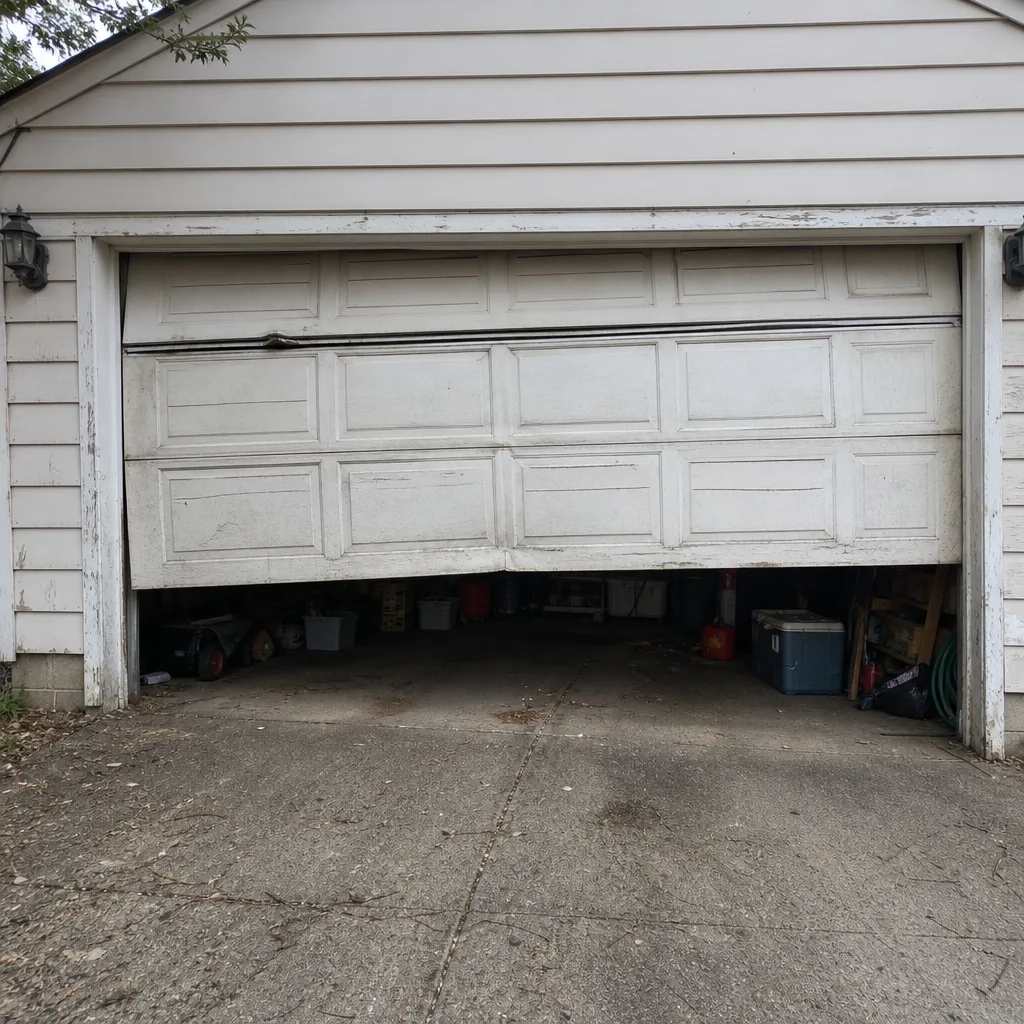 Before
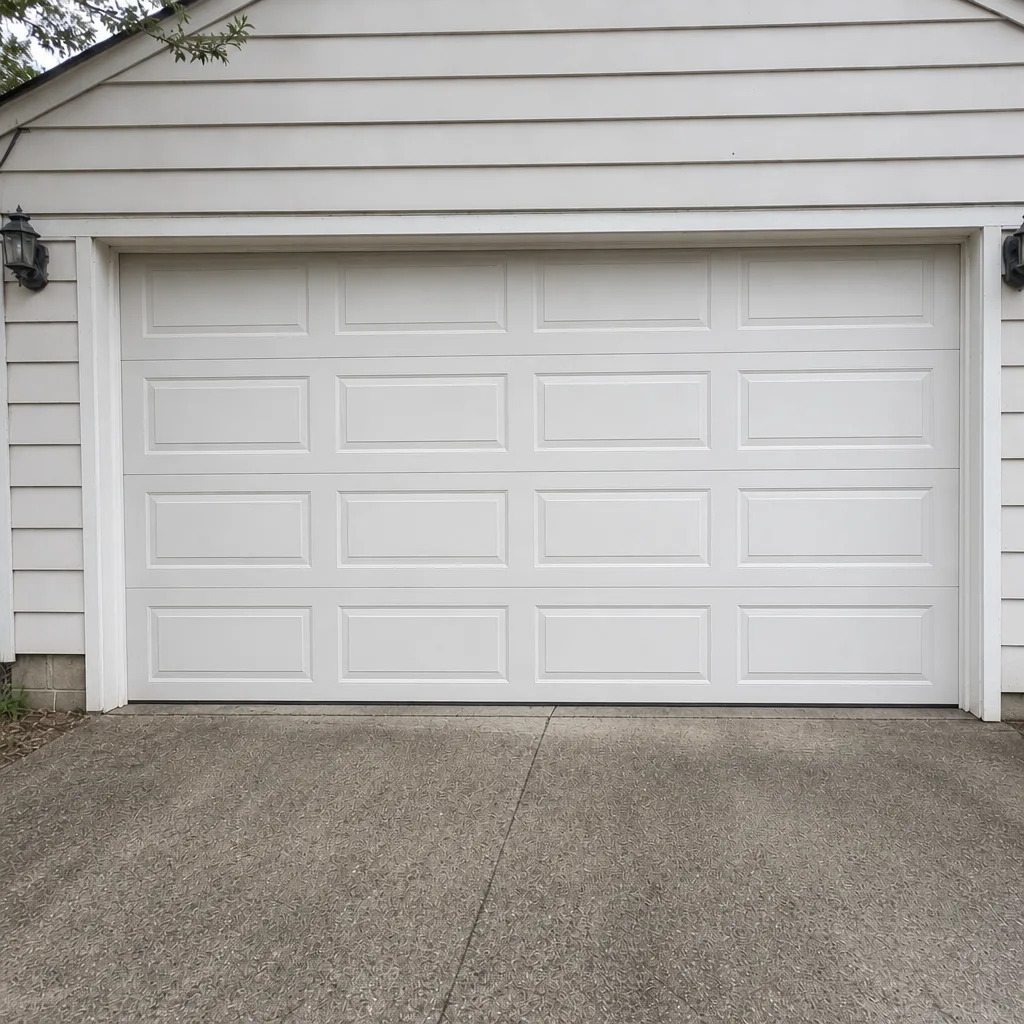 After
When to Call a Professional
Call for a professional when the door won’t lift, won’t close, hangs crooked, or makes a loud bang. Call when a cable is frayed or hanging. Call when the opener hums without moving the door, or when the safety reverse won’t work. Call when the door has been hit and a panel is cracked or off its hinges. And call if you’re simply not sure – the cost of a free estimate is nothing compared to forcing a door and rebuilding it.
For emergency service, call (866) 369-5561 and we’ll book the next opening. We answer 24/7, and fast dispatch runs from 7am to 7pm, Sunday through Friday. We’re closed on Saturday, so a Saturday call is booked into Sunday. If you’re preparing for the winter or want a worn spring or cable replaced before it fails, call the same number for a free estimate. Holyoke Garage Door Repair offers free estimates in Holyoke, and our technicians have up to 11 years of experience working on the full range of opening systems.
Frequently Asked Questions
Stop all use of the door, keep people and vehicles clear, and don’t force anything. If the door is stuck open, clamp locking pliers on both vertical tracks below a roller to secure it, then call (866) 369-5561. We answer 24/7, and if you call outside dispatch hours, we’ll book you into the next opening, Sunday through Friday, 7am to 7pm.
No. A broken spring means the door’s full weight is unsupported, and pulling the manual release cord lets that weight drop on the tracks. Leave the door closed, keep clear, and call for spring repair. Our technicians have up to 11 years of experience handling this exact situation safely.
In almost every winter case in Holyoke, it’s ice or snow, not a mechanical failure. The bottom seal freezes to the concrete, or ice builds in the track and blocks the safety sensors. Clear visible ice by hand with the door held open and disconnected, then try again. If it still won’t close, call us – never force it with the opener.
Spring repair is priced per spring by a written estimate, and a matched pair is typically replaced together. We give you the written price before any work starts, so the estimate is the bill. Call (866) 369-5561 for a free estimate and an exact price for your door.
Yes, same-day service is available for most repairs. Call (866) 369-5561. We answer 24/7, fast dispatch runs from 7am to 7pm, Sunday through Friday, and we’ll tell you the next opening when you call.
Have your door width, opener brand and model, and spring type ready, plus a photo of the spring assembly and opener label if you can. That tells us whether you need a Genie or Clopay part or a LiftMaster opener repair before we arrive, so the technician brings the right parts. Include your address and any access notes, like a steep or narrow driveway.
Yes. Every local technician we connect you with is licensed and insured as their state requires. We work on all major brands, including LiftMaster, Chamberlain, Genie, Clopay, Amarr, Wayne Dalton, Craftsman, and Raynor. Call (866) 369-5561 for a free estimate – the price is quoted and agreed before any work starts.
The Bottom Line
Garage door emergencies in Holyoke follow a predictable pattern, and the first ten minutes decide how expensive they get. The safe response is always the same: stop the door, keep people clear, secure it if it’s open, and leave the springs and cables alone. The manual release cord is a tool for dead openers, not a repair for broken springs, and forcing a frozen door is what turns a seal replacement into a panel rebuild.
Know your door’s width, opener brand, and spring type before you ever need to call. Replace worn springs and cables before winter sets in, not after they fail. And if something breaks, that’s what we’re here for. Call (866) 369-5561 for a free estimate. We answer 24/7. Fast dispatch from 7am to 7pm, Sunday through Friday. We’re closed Saturday.
Written by the team at Holyoke Garage Door Repair.